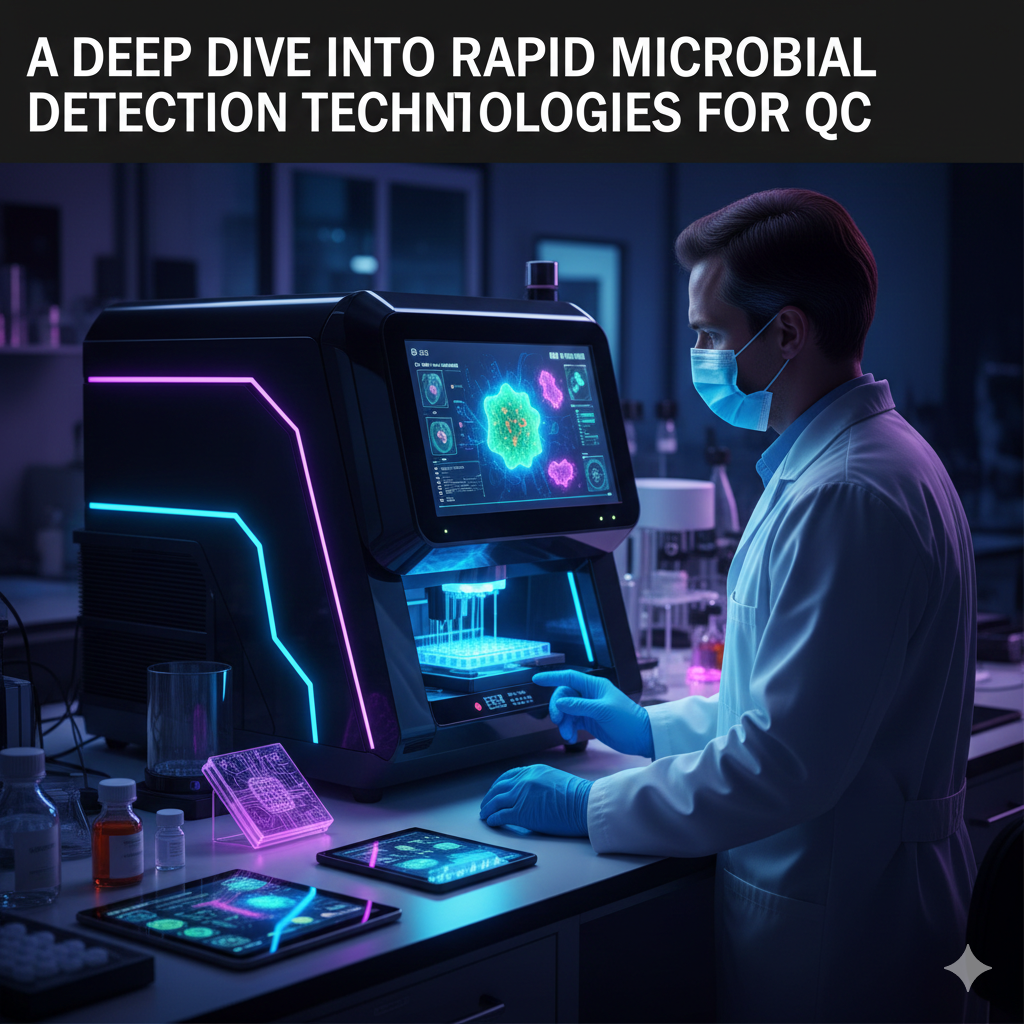
In the high-stakes world of Quality Control (QC), the traditional “plate and wait” method is becoming a bottleneck. While agar plates have been the industry standard for over a century, modern manufacturing—from biopharmaceuticals to perishable food—demands faster, more precise data.
Rapid Microbial Methods (RMMs) are transforming the mic test landscape by shifting the focus from macroscopic growth to molecular and cellular signals. Here is a deep dive into the technologies leading the charge.
1. Polymerase Chain Reaction (PCR) and Nucleic Acid Testing
PCR revolutionized microbiology by allowing labs to detect the genetic “fingerprint” of a microorganism without needing to grow a colony.1
- How it Works: The technology targets specific DNA or RNA sequences unique to a pathogen (like Salmonella or Listeriae). It then uses thermal cycling to amplify these sequences millions of times until they are detectable.
- The QC Advantage: You can identify a specific pathogen in 4–6 hours rather than 3–5 days.
- The Limitation: PCR is almost too sensitive; it can detect DNA from dead microbes, potentially leading to a “false positive” for a product that has been successfully heat-treated.2
2. Flow Cytometry (Solid-Phase and Fluorescent)
Flow cytometry is essentially a high-speed “cell counter” that uses lasers to analyze individual particles in a fluid stream.3
- How it Works: Microorganisms are stained with fluorescent dyes that only react with active metabolism or intact cell membranes. As the cells pass through a laser, the machine counts them one by one.4
- The QC Advantage: It detects Viable But Non-Culturable (VBNC) organisms—microbes that are alive and dangerous but refuse to grow on a standard agar plate.5
- The Application: This is the gold standard for monitoring water purity in semiconductor and pharmaceutical manufacturing.
3. Optical Spectroscopy and Biosensors
Biosensors are the frontier of real-time monitoring. These devices combine a biological recognition element (like an antibody) with a physical transducer to signal the presence of a microbe.
- Bioluminescent Sensors: Similar to ATP testing but engineered to be much more sensitive, using specific light-emitting proteins to detect low levels of contamination in beverages.
- Surface Plasmon Resonance (SPR): An optical technique that measures changes in light refraction when bacteria bind to a sensor chip.
- The QC Advantage: These tools can often be integrated directly into the production line (In-line testing), providing an instantaneous “kill switch” if contamination is detected during the fill-finish process.
4. Growth-Based RMMs (Automated CO2 Detection)6
For labs not ready to jump into full DNA sequencing, automated growth-based systems offer a middle ground between traditional plating and high-tech molecular tools.
- How it Works: These systems (like BacT/ALERT) use colorimetric sensors to detect the CO2 produced by microbial respiration.7 The moment a microbe “breathes” in the sample vial, the system triggers an alarm.
- The QC Advantage: It provides continuous monitoring 24/7. You don’t have to wait for a technician to check an incubator; the machine emails you the moment a sample turns positive.
RMM vs. Traditional Plating: Technology Comparison
| Technology | Detection Target | Time to Result | Sensitivity |
| Traditional Agar | Visible Colony | 2–14 Days | 1 CFU |
| PCR | DNA/RNA | 4–8 Hours | Very High |
| Flow Cytometry | Membrane Integrity | < 1 Hour | Single Cell |
| ATP Assay | Metabolic Energy | < 5 Minutes | High |
Why the Industry is Slow to Switch (The Regulatory Hurdle)
If these technologies are so much better, why hasn’t every lab ditched the agar plate? The answer lies in Validation.
Regulators (like the FDA) require “equivalence” or “non-inferiority” testing. If you switch to a rapid mic test, you must prove that the new tech is at least as good as the old one. This involves a rigorous “side-by-side” study that can take months of data collection.
Conclusion
The future of Quality Control is digital, molecular, and rapid. While the agar plate will always have a place as a confirmatory tool, RMMs like PCR and Flow Cytometry are essential for any facility looking to reduce “hold times” and improve patient or consumer safety.