
In a microbiology lab, your culture media is the foundation of every experiment. When the media fails, the data follows. Troubleshooting media issues requires a detective’s mindset—moving past “it didn’t grow” to identifying the specific physical or chemical culprit.
At MicTest.wiki, we’ve compiled the most common media-related headaches and the actionable fixes you can apply today.
1. The Mystery of the Shifting pH
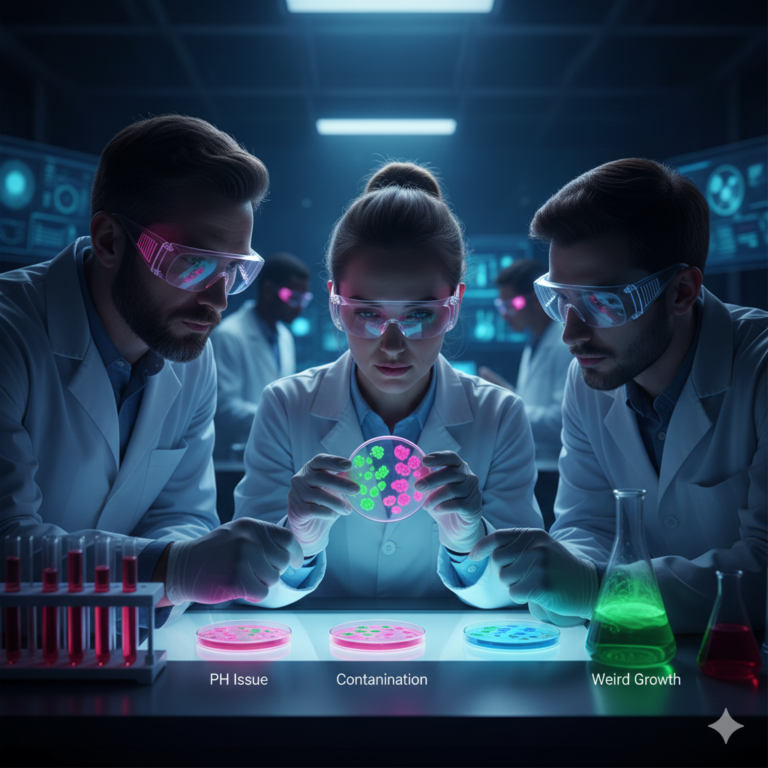
Microbes are highly sensitive to their environment’s acidity or alkalinity. A pH shift of even 0.5 units can inhibit growth or alter the metabolic products you are trying to measure.
- The Symptom: Your media changes color (if it contains an indicator like Phenol Red) or your usually robust cultures are stagnant.
- The Culprits: * Over-autoclaving: Excessive heat can degrade glucose and other components, producing acids that drop the pH.
- Improper Storage: Storing media in a refrigerator with a glass door or near fluorescent lights can lead to photo-oxidation and pH drift.
- Water Quality: Using deionized water that hasn’t been recently tested for high alkalinity or mineral content.
- The Fix: Always check pH after sterilization once the media has cooled to room temperature. If drift is consistent, reduce your autoclave time or switch to a higher-quality water source.
2. Contamination: Identifying the Uninvited Guests
Contamination is the most common reason for a failed mic test. Learning to “read” the contamination type can help you find the source.
Bacterial vs. Fungal Indicators
- Bacterial Contamination: Usually presents as rapid-onset turbidity (cloudiness) in broth or small, shiny “oil-spot” colonies on agar. It often causes a sharp drop in pH (media turns yellow).
- Fungal/Yeast Contamination: Presents as “fuzzy” or filamentous growth on the surface. Yeasts may look like bacteria but often have a distinct “bread-like” or sour odor.
- The Troubleshooting Path: * Is it in every plate? If yes, the batch was contaminated during preparation/autoclaving.
- Is it only on one side of the plate? This suggests an issue with your aseptic technique or a draft in the laminar flow hood.
3. Weird Growth Patterns: When Colonies Don’t Look “Right”
Sometimes you get growth, but it looks like a smear, a satellite, or a shrunken island.
The “Smear” (Confluent Growth)
- The Issue: Instead of isolated colonies, you have a solid “lawn” of bacteria across the plate.
- The Cause: Wet Plates. If condensation is present on the agar surface before you streak, the bacteria “swim” across the water film and merge.
- The Fix: Dry your plates in the incubator (lid slightly ajar) for 20–30 minutes before use. Always store plates agar-side up.
Satellite Colonies
- The Issue: Tiny colonies growing around a larger, central colony.
- The Cause: Common in antibiotic selection (like Ampicillin). The large colony secretes an enzyme that destroys the antibiotic in the immediate area, allowing non-resistant “satellites” to grow.
- The Fix: Don’t incubate plates for more than 16–18 hours, and ensure your antibiotic concentration is fresh and accurate.
Cracked or Shrunken Agar
- The Issue: The agar is pulling away from the sides of the Petri dish or showing deep cracks.
- The Cause: Desiccation (Dehydration). This happens in high-airflow environments or if the agar was poured too thin.
- The Fix: Increase the volume of agar per plate (aim for 20–25ml) and avoid placing plates directly under the fan unit of the incubator.
Quick Reference Troubleshooting Table
| Problem | Likely Cause | Immediate Action |
| Media turns yellow (acidic) | Bacterial contamination or over-heating | Check autoclave logs; improve aseptic technique |
| Fuzzy/Hairy growth | Fungal spores from air/environment | Clean incubator; check HEPA filters in hood |
| No growth at all | Antibiotic too hot when added; wrong pH | Add supplements only when media is <50°C |
| Agar is “soupy” | Incorrect weighing; pH < 5.0 | Re-weigh agar powder; check pH before pouring |
Conclusion
Most media issues at MicTest.wiki are traced back to three things: Heat, Moisture, and Hygiene. By cooling your media properly before adding sensitive supplements and ensuring your plates are dry before streaking, you can eliminate 80% of common lab failures.